/projects/amazcart
2024–2026
Amazcart — multivendor e-commerce, owned end-to-end
- client:
- Spondon IT — CodeCanyon product
- role:
- Technical Project Manager
- Laravel
- Vue.js
- MySQL
- Redis
01 — the problem
What was actually at stake
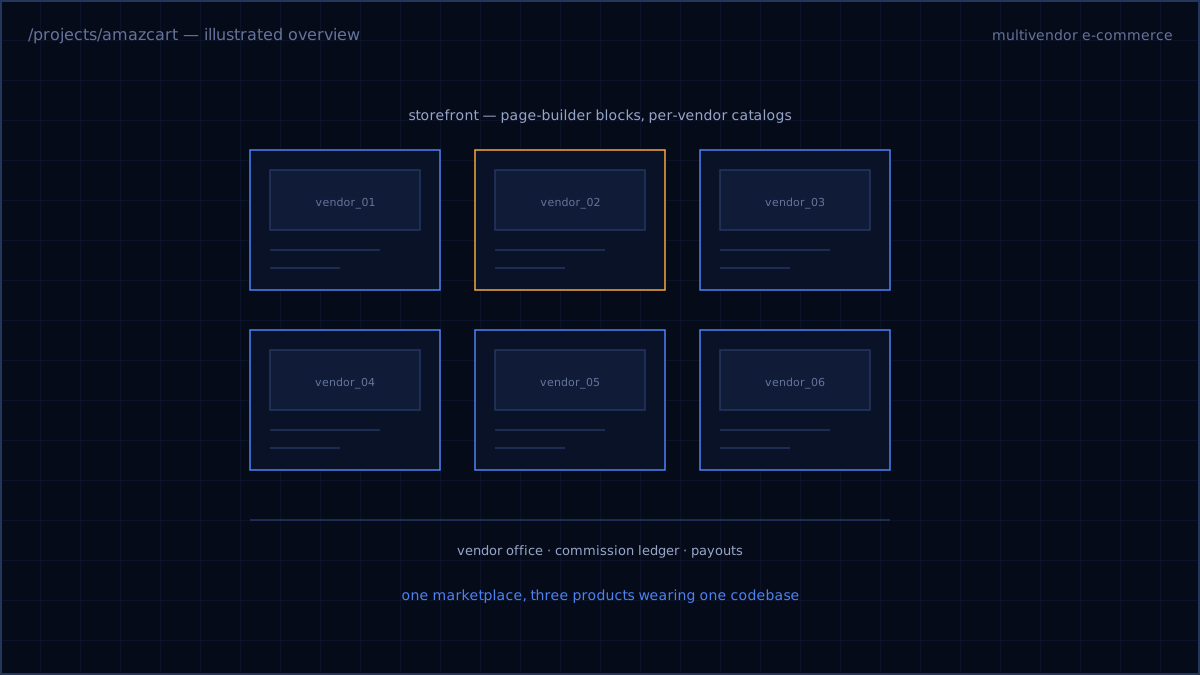
Multivendor e-commerce is three products wearing one codebase: a storefront for buyers, a back office for vendors, and a control plane for the marketplace owner. Each pulls the roadmap in a different direction, and CodeCanyon buyers expect all three to be customizable without touching code.
02 — the architecture
How it was built
Vendor flows (onboarding, catalogs, commission ledgers, payouts) sit on their own module boundary, so marketplace logic can't leak into the storefront. The page builder I drove onto Amazcart (and InfixEdu) lets buyers compose storefront pages from blocks — the difference between “customizable” meaning a settings page and meaning it actually looks like their brand.
Payments ride the shared gateway layer, which is what lets one product sell into South Asia, the Gulf, Africa, and Latin America without forking. As TPM I owned the roadmap, the release gates, client escalations — and the code, when a release needed rescuing.
- boundaries
- storefront / vendor office / owner control plane
- page builder
- block-based storefront customization
- payments
- shared 20+ gateway layer
- delivery
- TPM-owned: roadmap → release → escalation
03 — the visuals
What it looks like
screenshot pending (NDA-safe crop)
drop /public/images/projects/amazcart/01.jpg · 1600×900 · see docs/images.md
screenshot pending (NDA-safe crop)
drop /public/images/projects/amazcart/02.jpg · 1600×900 · see docs/images.md
04 — from the codebase
Commission resolved per vendor agreement, not hardcoded
public function settle(Order $order): void
{
    foreach ($order->vendorSplits() as $split) {
        $agreement = $this->agreements->for($split->vendor);

        // category overrides > vendor rate > marketplace default
        $rate = $agreement->rateFor($split->items);

        $this->ledger->credit($split->vendor, [
            'order_id' => $order->id,
            'gross' => $split->subtotal,
            'commission' => $split->subtotal * $rate,
            'rate_version' => $agreement->version(),  // disputes replay this
        ]);
    }
}
05 — the outcome
What the numbers say
- storefront · vendor office · control plane
- 3-in-1
- page-builder customization, no code
- blocks
- markets via the shared gateway layer
- global
The product a TPM gets judged on first — shipped on cadence, escalations included.